
Be Ready, Iligan: Why a Go Bag Matters in Times of Emergency
On a quiet day, none of us expects the earth to shake, floods to rise, or storms to surge without warning. But recent events in Iligan and surrounding areas remind us how sudden disasters can be. A go bag (also called a grab-and-go or emergency kit) is a critical tool in those moments when every second counts.
Proper preparedness — having a go bag, a household plan, and knowledge of safe actions — can mean the difference between chaos and survival. In this article, we explore how Iligan residents can build a go bag tailored to local risks, especially earthquakes, and stay ready when disaster strikes.
Earthquakes & Emergencies in Iligan: The Context
Iligan is in Mindanao, a region subject to seismic activity, heavy rainfall, floods, and landslides. The Philippine Institute of Volcanology and Seismology (PHIVOLCS) emphasizes that while earthquakes cannot be precisely predicted, we can prepare for them through mitigation, readiness, and public education. PHIVOLCS
When a quake strikes:
- Utilities (water, electricity, gas) may be disrupted
- Roads may be impassable
- Communication networks may be overloaded
- Rescue and relief efforts may take time
Having essentials on hand allows you to sustain yourself and your loved ones until help arrives.
What Is a Go Bag — and Why It’s Essential in Iligan
A go bag (sometimes called an emergency kit or “emergency balde” in local disaster manuals) is a pre-packed bag of essential items you can grab quickly if you must evacuate or move fast. lga.gov.ph
It’s important to distinguish:
- Go bag = items you can carry with you
- Home emergency kit = bulkier supplies stored at home
A go bag is your first line of survival when seconds matter.
What to Put in Your Iligan Go Bag
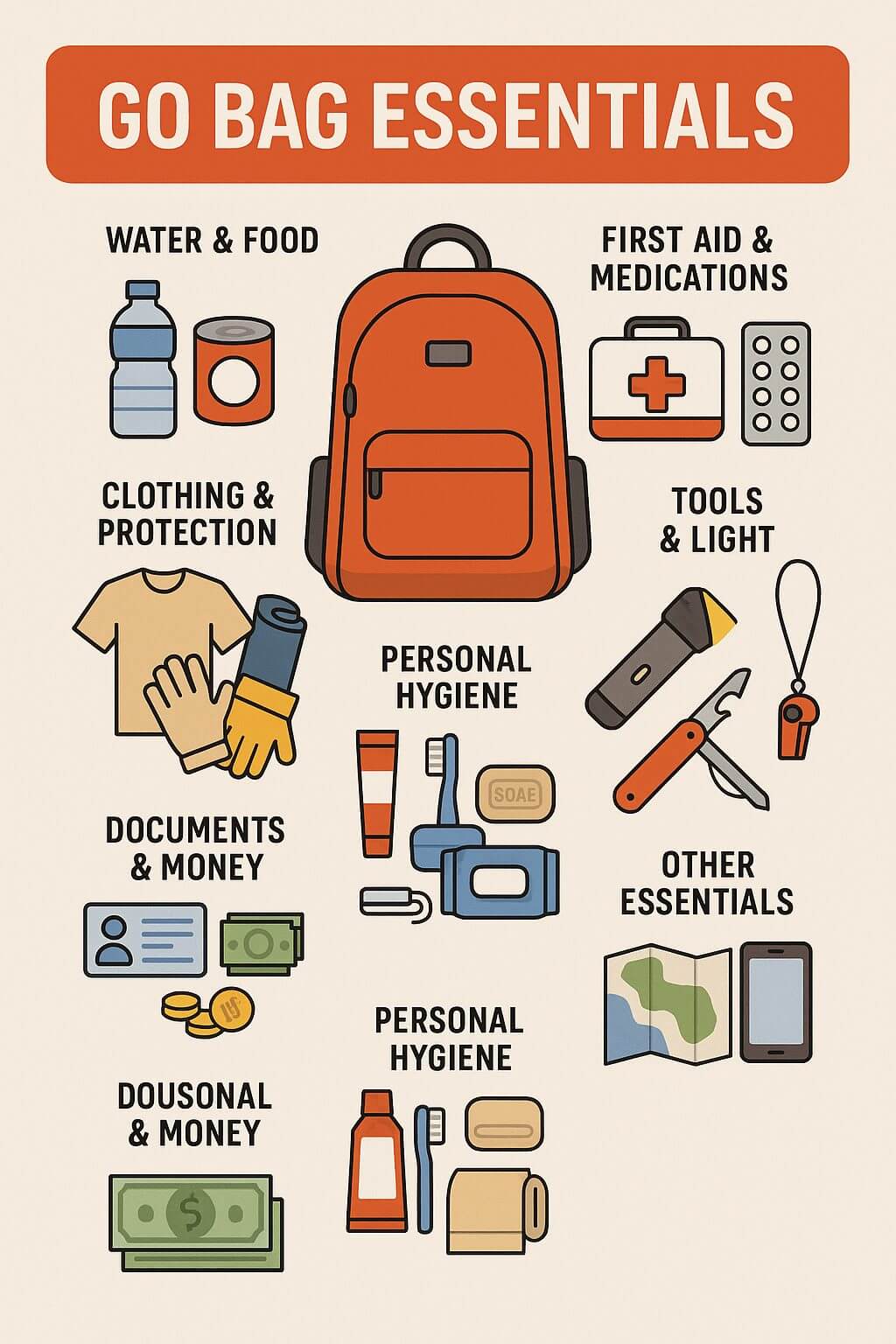
Below is a checklist adapted for Iligan’s hazards (earthquake, flood, storms). Use it as your starting point, and tailor it to your family’s needs:
| Category | Key Items | Notes / Tips |
|---|---|---|
| Water & Food | At least 2–3 days’ supply of drinking water; ready-to-eat food (canned goods, energy bars) | Rotate supplies every 6 months |
| First Aid & Medications | Basic first aid kit (bandages, antiseptic, gauze, scissors), prescription medicines, over-the-counter meds | Include medicines for children, elders, allergies |
| Clothing & Protection | Extra clothes, rain jacket, sturdy shoes, gloves | Include a change of clothes for each person |
| Tools & Light | Flashlight (crank or battery), spare batteries, multi-tool or knife, whistle, duct tape, rope | A whistle helps rescuers locate you |
| Communication & Power | Power bank, portable radio (crank or solar), extra charging cables | Keep them charged periodically |
| Documents & Money | IDs, house title, insurance papers, list of emergency contacts, cash (small bills) | Keep them in a waterproof pouch |
| Personal Hygiene | Toothbrush, toothpaste, soap, wet wipes, sanitary pads, towel | Especially important if staying in shelters |
| Other Essentials | Maps, notepad & pen, local contact numbers, a small comfort or toy for children | Helps in coordination and morale |
| Extras (if possible) | Face masks, gloves, flashlight, dust masks | Useful in post-quake rubble or dust |
UNICEF Philippines similarly recommends these core categories: medicine, food, water, tools, documentation, and hygiene. UNICEF
Tips for Effective Use & Maintenance
- Lightweight & portable — Use a durable waterproof backpack you can carry on your back.
- Place it in a reachable spot — Not buried under things; ideally near your exit route.
- Personalize it — Add for babies, elders, pets (extra food, medicine, leash).
- Regular checks — Every 3–6 months, replace expired items, recharge devices, update documents.
- Train the family — Practice “Drop, Cover, Hold On” during quakes; designate meeting spots.
- Community coordination — Barangays and neighborhood groups should encourage neighbors to share equipment (e.g. tools, flashlights) in disaster response.
Lessons from Past Earthquakes & Disasters
- Many injuries in earthquakes come from falling objects and broken glass — wearing sturdy shoes and securing furniture helps.
- Communication often fails, so having a personal radio or whistle is a lifeline.
- In past disasters, people who were “go-bag ready” were able to assist neighbors quickly or move to safer zones.
- Local disaster management offices often highlight that no single household is an island: community preparedness and mutual aid are essential.
Toward a More Resilient Iligan
Preparedness is not just an individual task — local government units (LGUs), barangays, schools, and civic groups must promote public awareness, trainings, and drills. Infrastructure retrofitting, early warning systems, and stronger enforcement of building codes further bolsters community safety.
If Iligan strengthens preparedness culture and every household has a go bag, the city as a whole becomes more resilient when disaster does strike.
Frequently Asked Questions (FAQ): Preparedness in Iligan
Summary:
This comprehensive FAQ addresses the most common questions about disaster preparedness in Iligan, including how to prepare a go bag, what to do during emergencies like earthquakes and floods, and how residents can stay informed through official Iligan emergency channels.
Iligan Preparedness 101: Why Readiness Matters
Iligan City, known for its waterfalls and industries, also faces natural hazards such as earthquakes, floods, and landslides. The city’s location in Mindanao makes preparedness not optional, but essential.
The following FAQs are meant to help every Iliganon strengthen their safety and resilience at home, in school, and in the community.
1. Why is preparedness important for Iligan residents?
Iligan lies near active fault zones and coastal areas prone to flooding. Being prepared means having a plan, supplies, and information before disaster strikes. Preparedness minimizes panic, speeds recovery, and can save lives.
2. What types of emergencies are common in Iligan?
Iligan faces several natural and human-induced hazards, including:
- Earthquakes (due to Mindanao’s seismic activity)
- Floods and landslides (especially in low-lying barangays)
- Typhoons and heavy rains
- Power outages and infrastructure damage during severe weather
Understanding these risks helps residents prepare appropriately.
3. What is a “go bag,” and why should I have one?
A go bag (or emergency kit) is a portable bag with essentials you can grab immediately when evacuating. It typically contains:
- Drinking water and ready-to-eat food
- Flashlight and batteries
- First aid kit and medicines
- Extra clothes and hygiene items
- Important documents and cash
- Communication devices (radio, power bank, phone charger)
Every Iligan household should have at least one go bag ready at all times.
4. How often should I check or replace items in my go bag?
Review your go bag every three to six months. Replace expired food, water, and medicine; recharge power banks; and update important documents like IDs and contact lists.
5. Where should I keep my go bag at home?
Store your go bag in an easily accessible area, ideally near your exit route. Avoid placing it in storage rooms or high shelves. Every family member should know where it is located.
6. What should families in Iligan do during an earthquake?
During an earthquake, remember the “Drop, Cover, and Hold On” rule:
- Drop to the ground to prevent falling.
- Cover your head and neck under sturdy furniture or beside an interior wall.
- Hold On until the shaking stops.
After the quake, evacuate calmly if your home is unsafe and watch for aftershocks. Stay updated via official Iligan City Disaster Risk Reduction and Management Office (ICDRRMO) announcements.
7. How can I receive real-time updates about disasters in Iligan?
Stay informed through:
- ICDRRMO official Facebook page (for alerts and advisories)
- PHIVOLCS for earthquake bulletins
- PAGASA for weather and flood warnings
- Local radio stations for community-level instructions
Bookmark these sources and ensure you can access them even when power or data are down.
8. How can barangays in Iligan promote preparedness?
Barangays can strengthen local resilience through:
- Regular disaster drills and orientations
- Setting up community warning systems (sirens, flags, text alerts)
- Mapping safe zones and evacuation centers
- Encouraging residents to assemble go bagsat share resources
A well-coordinated barangay greatly increases everyone’s chance of safety.
9. What is the role of schools and workplaces in Iligan preparedness?
Educational institutions and workplaces must follow the city’s disaster protocols, including:
- Conducting quarterly evacuation drills
- Designating safe areasat first aid stations
- Training personnel in basic life support and fire response
- Maintaining emergency kits for classrooms and offices
Preparedness is a shared responsibility — it starts with awareness and regular practice.
10. How can I get involved in community disaster programs in Iligan?
You can volunteer with local organizations such as:
- Iligan City DRRMO volunteer network
- Barangay disaster councils
- Red Cross Iligan Chapter
- Youth and civic groups that conduct relief and rescue efforts
Joining these programs helps you learn valuable survival skills while strengthening the community’s resilience.
Preparedness starts at home
Preparedness starts at home — and your go bag is your first shield in times of crisis. Whether it’s an earthquake, flood, or typhoon, having your essentials packed and ready can protect your family and give you peace of mind. Every Iliganon plays a role in building a resilient city — one that’s informed, equipped, and ready to respond when emergencies strike.
Start today. Review your supplies, update your plan, and encourage others to do the same. Because when we prepare together, Iligan becomes stronger together.